All posts by kathymacmillan

Bathtime, Bathtime: A Song to Sign


Here’s a fun bathtime song to sing and sing after reading Nita’s Day!


Bathtime, Bathtime: A Song to Sign

This is the latest entry in my Little Hands Signing video series. See the whole series here and look for more videos to come!


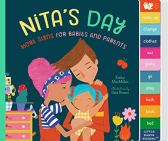
In honor of the release of Nita’s Day, I’m giving away a signed copy of the set! This makes a great gift and may be personalized. Must by 18 or older to enter. US Only. Giveaway closes May 22, 2020. Find 3 ways to enter here!


Sign All Day Long!

You can sign with your child to support early literacy, create more productive communication, and provide emotional security for your child all day long! Here’s a rhyme to sign using the signs from Nita’s Day: More Signs for Babies and Parents. Find this and other signing activities in the Nita’s Day Teacher/Librarian Guide.

All Day Long: A Rhyme to Sign

This is the latest entry in my Little Hands Signing video series. See the whole series here and look for more videos to come!


25 Recommended Picture Books for Online Storytimes

When presenting storytime online, it’s best to choose picture books that have large, clear illustrations. Here are 25 of my favorites. Many of the authors and illustrators below have multiple books that would work well for online storytimes, but I only included one on the list as an exemplar. Look for other books by these authors and illustrators to round out your online storytime collection.


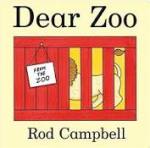
Dear Zoo by Rod Campbell

From Head to Toe by Eric Carle

Hair Love by Matthew A. Cherry and Vashti Harrison


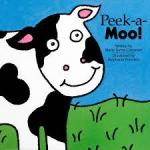
Peek-a-Moo by Maria Torres Cimarusti and Stephanie Peterson

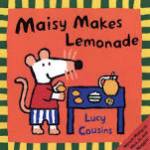
Maisy Makes Lemonade by Lucy Cousins

Lunch by Denise Fleming


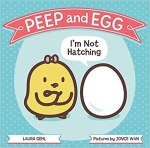
Peep and Egg: I’m Not Hatching by Laura Gehl and Joyce Wan

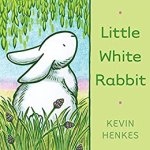
Little White Rabbit by Kevin Henkes

Sleepyheads by Sandra J. Howatt and Joyce Wan


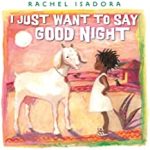
I Just Want to Say Good Night by Rachel Isadora

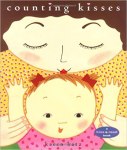
Counting Kisses by Karen Katz

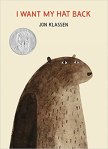
I Want My Hat Back by Jon Klassen


Baby Faces by Margaret Miller

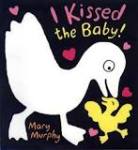
I Kissed the Baby by Mary Murphy

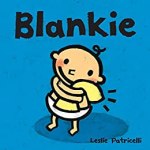
Blankie by Leslie Patricelli


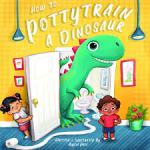
How to Potty Train a Dinosaur by Alycia Pace

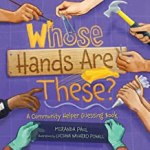
Whose Hands Are These?: A Community Helper Guessing Book by Miranda Paul and Luciana Navarro Powell

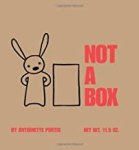
Not a Box by Antoinette Portis


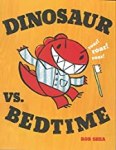
Dinosaur vs. Bedtime by Bob Shea

She Leads: The Elephant Matriarch by June Smalls and Yumi Shimokawara

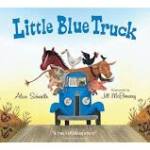
Little Blue Truck by Alice Schertle and Jill McElmurry


Mouse’s First Summer by Lauren Thompson and Buket Erdogan

Round is a Mooncake: A Book of Shapes by Roseanne Thong and Grace Lin


Little You by Richard Van Camp and Julie Flett

Don’t Let the Pigeon Drive the Bus! by Mo Willems


Getting Started Signing with Your Young Child

There are so many benefits to signing with all young children! But how do you start without overwhelming yourself? In this video, I offer some tips to begin:

Getting Started Signing With Your Child


NITA’S DAY: MORE SIGNS FOR BABIES AND PARENTS comes out May 12, 2020 from Familius Press! Preorder now at Workman.com and get 20% off when you use promo code BOOKS!


ASL Storytime with NITA’S FIRST SIGNS

Here’s NITA’S FIRST SIGNS, presented in American Sign Language, as part of #OperationASLStorytime and hosted by D-PAN.TV: The Sign Language Channel.

(English captioning coming soon for the signing impaired.)

There are SO many wonderful ASL story videos in this collection. Don’t miss my very favorite one: a retelling of PETE’S A PIZZA by William Steig in ASL, English voiceover, and dramatic pizza play.

Keeping Online Storytimes Engaging

With so many libraries closed to the public, it seems like everyone is offering online storytimes!  I was asked to share my tips for keeping online storytimes interactive, so here you go!
When presenting virtually where you can’t see your audience, it’s really hard to adjust your approach and pace when you are not getting any response, so it’s really important to remember the following. (And pro tip: sticky notes on the side of your monitor with reminders work really well!)
  1. Slow down. Even if it feels like you are already speaking slowly, slow it down. Most kids can’t listen as fast as we grownups like to talk.
  2. Make eye contact with the camera. Yes, this feels weird. It might help to put a stuffed animal or a picture of a favorite kiddo right above or next to the camera, so you can make eye contact with that.
  3. Allow time for responses. No, more time than that. More. In person, adults generally only give kids one second of silence before they fill it in for them. When you don’t have the kid in front of you, it’s tempting to just plow ahead. But seriously, give the kids time to answer, participate, copy the movement, whatever. Yes, you will feel like Dora the Explorer blinking at the camera in silence. That’s okay!  There’s a reason that developmentally appropriate kids’ shows use this tactic. It encourages a response and it allows kids of all different learning styles to take the information in.
  4. Use repetition to create more space for understanding. While repetition on its own is useful, because it reinforces information, it’s also useful because it allows kids (and parents) more time with the material. For example, when introducing an ASL sign, I always break it down and explain what I am doing as I show it multiple times. Kids may or may not be actually listening to what I am saying in that explanation, based on their learning style, but the time it takes to explain it keeps visual and auditory focus on the sign and allows everyone the time to learn it.
  5. Be explicit about how you want children (and grownups) to participate. Some kids will already be clapping their hands or hooting like owls or whatever, but some will need the storyteller to say it explicitly in the absence of the peer modeling of seeing others do it. And many grownups will need the extra push even more!
  6. Give grownups clear suggestions for how to tie storytime activities to everyday life with their children. This is something we do anyway, but now that many parents are their children’s exclusive language and literacy models, and many of them are overwhelmed, it’s important that we give them solid suggestions that show how easy it is to incorporate literacy into their daily routines.
  7. Learn from the pros!  Children’s TV shows have been incorporating these strategies for a long time. Mr. Rogers is of course the gold standard, but a modern one that I love is the Baltimore-based Danny Joe’s Treehouse, which incorporates a deep knowledge of child development with online engagement techniques.
  8. American Sign Language lends itself well to online storytimes, because it lends a visual and kinetic aspect to storytimes that can still be contained within the camera frame. For lots of resources on incorporating ASL into your storytimes, see my resource page for signing in storytime or the classroom.

(This post has been cross-posted to StorytimeStuff.net)

Recommended Reading: SHOW ME A SIGN by Ann Clare LeZotte

I just finished reading an Advance Reader Copy of Show Me a Sign by Deaf author Ann Clare LeZotte, and I couldn’t wait to tell the world about it! The book comes out March 3, 2020 from Scholastic, but you can preorder it from IndieBound, Amazon, or Barnes and Noble. More information and my complete gushing below!

Show Me a SignShow Me a Sign by Ann Clare LeZotte
Summary: Mary Lambert has always felt safe and protected on her beloved island of Martha’s Vineyard. Her great-grandfather was an early English settler and the first deaf islander. Now, over a hundred years later, many people there – including Mary – are deaf, and nearly everyone can communicate in sign language. Mary has never felt isolated. She is proud of her lineage. But recent events have delivered winds of change. Mary’s brother died, leaving her family shattered. Tensions over land disputes are mounting between English settlers and the Wampanoag people. And a cunning young scientist has arrived, hoping to discover the origin of the island’s prevalent deafness. His maniacal drive to find answers soon renders Mary a “live specimen” in a cruel experiment. Her struggle to save herself is at the core of this penetrating and poignant novel that probes our perceptions of ability and disability.

The history of Martha’s Vineyard Sign Language has fascinated me ever since I first devoured Nora Groce’s seminal ethnography Everyone Here Spoke Sign Language: Hereditary Deafness on Martha’s Vineyard (Harvard University Press). Not only was MVSL one of the building blocks of American Sign Language, but the history of Martha’s Vineyard showed a wonderful example of what can happen when everyone has equal access to communication.

Ann Clare LeZotte brings the island community to life, and – no doubt because she is a Deaf ASL user herself – sidesteps the awkwardness that hearing authors often bring to showing signed interactions on the page. The result is a story that flows as naturally as the signs off the hands of deaf and hearing islanders alike – a story of a tight-knit community where everyone is valued, and the intrusion of the outside hearing world that only sees deaf islanders as specimens to study. LeZotte managed to incorporate lots of historical information – about the history of the island, about the early history of deaf education in America, about sign languages themselves – without ever letting the facts overwhelm the story and characters. What impressed me most, though, was the way the author wove in marginalized voices that, in most historical fiction like this, would have been overlooked – the Wampanoag Tribe of Gay Head, the black freedmen on the island, the fact that the early schools for the deaf were segregated. This too, is done with a deft touch, as protagonist Mary reckons with the way the larger hearing world views her and her community, and learns how her own people have marginalized others. Anyone who dismisses this book as “niche” is missing out – in fact, it’s a big-hearted adventure and family story that will provoke reflections and discussions about intersectionality from writers and readers alike.

As an ASL interpreter, librarian, and book reviewer, I have reviewed a LOT of books about ASL and Deaf Culture over the years. There have been a lot of “well, at least now there’s a book on this topic….better than nothing, I guess.” So to have this book to recommend, that’s THIS good, AND by a Deaf author…all I can say is:

I received an Advance Reader Copy of this book in exchange for an honest review.

View all my reviews