Category Archives: Resources for Educators and Librarians

Sign All Day Long!

You can sign with your child to support early literacy, create more productive communication, and provide emotional security for your child all day long! Here’s a rhyme to sign using the signs from Nita’s Day: More Signs for Babies and Parents. Find this and other signing activities in the Nita’s Day Teacher/Librarian Guide.

All Day Long: A Rhyme to Sign

This is the latest entry in my Little Hands Signing video series. See the whole series here and look for more videos to come!


25 Recommended Picture Books for Online Storytimes

When presenting storytime online, it’s best to choose picture books that have large, clear illustrations. Here are 25 of my favorites. Many of the authors and illustrators below have multiple books that would work well for online storytimes, but I only included one on the list as an exemplar. Look for other books by these authors and illustrators to round out your online storytime collection.


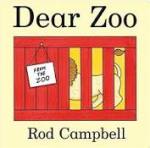
Dear Zoo by Rod Campbell

From Head to Toe by Eric Carle

Hair Love by Matthew A. Cherry and Vashti Harrison


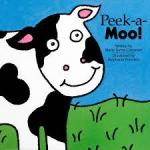
Peek-a-Moo by Maria Torres Cimarusti and Stephanie Peterson

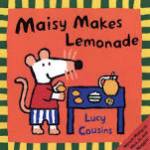
Maisy Makes Lemonade by Lucy Cousins

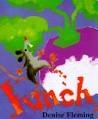
Lunch by Denise Fleming


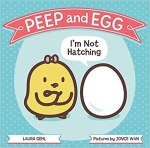
Peep and Egg: I’m Not Hatching by Laura Gehl and Joyce Wan

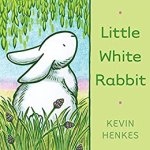
Little White Rabbit by Kevin Henkes

Sleepyheads by Sandra J. Howatt and Joyce Wan


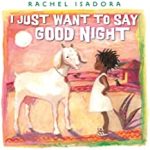
I Just Want to Say Good Night by Rachel Isadora

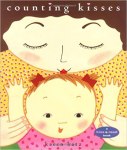
Counting Kisses by Karen Katz

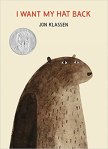
I Want My Hat Back by Jon Klassen


Baby Faces by Margaret Miller

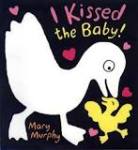
I Kissed the Baby by Mary Murphy

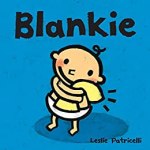
Blankie by Leslie Patricelli


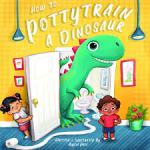
How to Potty Train a Dinosaur by Alycia Pace

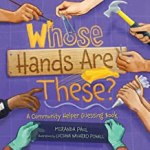
Whose Hands Are These?: A Community Helper Guessing Book by Miranda Paul and Luciana Navarro Powell

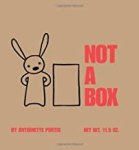
Not a Box by Antoinette Portis


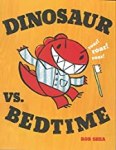
Dinosaur vs. Bedtime by Bob Shea

She Leads: The Elephant Matriarch by June Smalls and Yumi Shimokawara

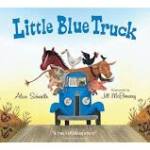
Little Blue Truck by Alice Schertle and Jill McElmurry


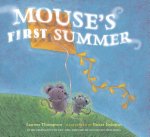
Mouse’s First Summer by Lauren Thompson and Buket Erdogan

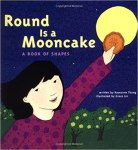
Round is a Mooncake: A Book of Shapes by Roseanne Thong and Grace Lin


Little You by Richard Van Camp and Julie Flett

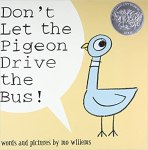
Don’t Let the Pigeon Drive the Bus! by Mo Willems


ASL Storytime with NITA’S FIRST SIGNS

Here’s NITA’S FIRST SIGNS, presented in American Sign Language, as part of #OperationASLStorytime and hosted by D-PAN.TV: The Sign Language Channel.

(English captioning coming soon for the signing impaired.)

There are SO many wonderful ASL story videos in this collection. Don’t miss my very favorite one: a retelling of PETE’S A PIZZA by William Steig in ASL, English voiceover, and dramatic pizza play.

Keeping Online Storytimes Engaging

With so many libraries closed to the public, it seems like everyone is offering online storytimes!  I was asked to share my tips for keeping online storytimes interactive, so here you go!
When presenting virtually where you can’t see your audience, it’s really hard to adjust your approach and pace when you are not getting any response, so it’s really important to remember the following. (And pro tip: sticky notes on the side of your monitor with reminders work really well!)
  1. Slow down. Even if it feels like you are already speaking slowly, slow it down. Most kids can’t listen as fast as we grownups like to talk.
  2. Make eye contact with the camera. Yes, this feels weird. It might help to put a stuffed animal or a picture of a favorite kiddo right above or next to the camera, so you can make eye contact with that.
  3. Allow time for responses. No, more time than that. More. In person, adults generally only give kids one second of silence before they fill it in for them. When you don’t have the kid in front of you, it’s tempting to just plow ahead. But seriously, give the kids time to answer, participate, copy the movement, whatever. Yes, you will feel like Dora the Explorer blinking at the camera in silence. That’s okay!  There’s a reason that developmentally appropriate kids’ shows use this tactic. It encourages a response and it allows kids of all different learning styles to take the information in.
  4. Use repetition to create more space for understanding. While repetition on its own is useful, because it reinforces information, it’s also useful because it allows kids (and parents) more time with the material. For example, when introducing an ASL sign, I always break it down and explain what I am doing as I show it multiple times. Kids may or may not be actually listening to what I am saying in that explanation, based on their learning style, but the time it takes to explain it keeps visual and auditory focus on the sign and allows everyone the time to learn it.
  5. Be explicit about how you want children (and grownups) to participate. Some kids will already be clapping their hands or hooting like owls or whatever, but some will need the storyteller to say it explicitly in the absence of the peer modeling of seeing others do it. And many grownups will need the extra push even more!
  6. Give grownups clear suggestions for how to tie storytime activities to everyday life with their children. This is something we do anyway, but now that many parents are their children’s exclusive language and literacy models, and many of them are overwhelmed, it’s important that we give them solid suggestions that show how easy it is to incorporate literacy into their daily routines.
  7. Learn from the pros!  Children’s TV shows have been incorporating these strategies for a long time. Mr. Rogers is of course the gold standard, but a modern one that I love is the Baltimore-based Danny Joe’s Treehouse, which incorporates a deep knowledge of child development with online engagement techniques.
  8. American Sign Language lends itself well to online storytimes, because it lends a visual and kinetic aspect to storytimes that can still be contained within the camera frame. For lots of resources on incorporating ASL into your storytimes, see my resource page for signing in storytime or the classroom.

(This post has been cross-posted to StorytimeStuff.net)

A Special Song and Giveaway!: Where Does a Cowgirl Go Potty?

Today I’m featuring a guest post from Dawn Babb Prochovnic, author of the excellent Story Time with Signs and Rhymes series (more about that here), about her upcoming releases and some exciting ways to use them in storytime!

Take it away, Dawn!


Hello Readers and Signers!

Kathy was kind enough to invite me to write a guest post on her blog to celebrate the upcoming release of my two latest picture books: Where Does a Cowgirl Go Potty? and Where Does a Pirate Go Potty? These new books are geared for young readers ages 3-8, but they will appeal to potty humorists of all ages.
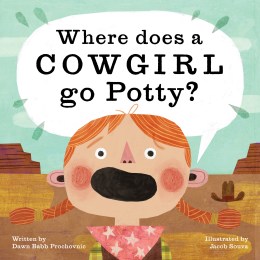
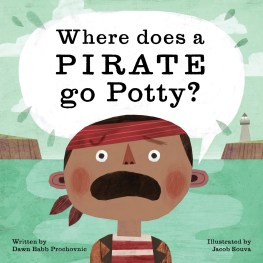
Although these new books don’t incorporate sign language like my Story Time with Signs & Rhymes series, in my experience, most books can be enriched with sign language with just a little bit of advanced planning. For example, I recently developed a detailed sign language story time lesson plan for folks who are interested in some comic relief while toilet training. You can find that lesson plan here.

That said, these new books are more aptly categorized as potty-humor books, vs. potty-training books. Given that I’ve taught Sing and Sign workshops for the past twenty years, music and sign language are infused in just about everything I do. Over the past couple of months, I had the unique opportunity to work with two different musicians to create a children’s song for each of my new books. I couldn’t be more pleased with how they turned out.

For the Where Does a Cowgirl Go Potty? song, I worked with singer, songwriter and performing musician, Marshall Mitchell.
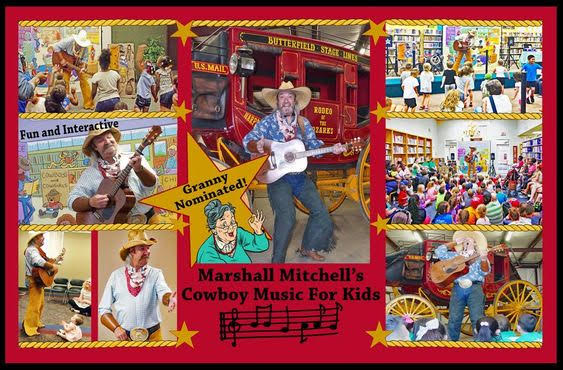
You can listen to our song here.

Kids of all ages love to sing and sign AND they love to laugh. Singing and signing along with the Where Does a Cowgirl Go Potty? song creates a perfect opportunity to incorporate all three of these fun activities.

I’ve included the song lyrics for Where Does a Cowgirl Go Potty? below, noting in bold some of the words you might consider signing along with. TIP: Don’t feel pressured to sign more words than you are comfortable with. It’s perfectly okay to start by signing only one or two key words, (for example, WHERE or POTTY) that repeat throughout the song. As your American Sign Language vocabulary (and your confidence) develops and grows, you can add more signs each time you sing. Rest assured, kids are likely to ask you to repeat the song again and again!

Here are the lyrics:

Where Does a Cowgirl Go Potty?

Lyrics by Marshall Mitchell and Dawn Prochovnic; Music written and performed by Marshall Mitchell

When she’s exploring nature…out west.

And her belly starts to feel somewhat distressed.

Out in the canyon or the brush…when she feels the need to rush.

Where does a cowgirl go potty?

When she’s out there on the wide and open range.

And her tummy starts to feel a little strange.

Because waiting is the worst…she thinks she just may burst.

Where does a cowgirl go potty?

Now she can’t go just anywhere…’Cause other folks go potty there.

She’ll find a place and then…it’s just beyond the next bend.

She knew it when she saw…then gave a big, “Yee-Haw!”

This is where a cowgirl goes potty.

Now, this is where a cowgirl goes potty.

Here are links to some reputable video-based resources for the bolded American Sign Language vocabulary , along with some brief reminder notes to help jog your memory as you are learning the signs:

  • BURST: Hands make exploding motion
  • COWBOY/COWGIRL: Think of a gunslinger
  • CAN’T (CANNOT): Pointer finger scolds/slaps other pointer finger
  • DISTRESSED: Think of nervous jazz hands
  • EXPLORE: Palm-down “V” handshapes looks/explores
  • FEEL: Middle finger brushes chest
  • FIND: Open hand becomes “F” Handshape
  • KNOW: Hand taps forehead then moves downward
  • NEXT: One hand passes over the other
  • OTHER: Ten handshape points “other” direction
  • POTTY/TOILET: The “T” handshape wiggles
  • STRANGE: “C” handshape droops near mouth
  • THIS: Pointer finger points to palm of other hand
  • WAIT: Palms up, fingers wiggle
  • WHERE: Pointer finger looks/searches
  • WIDE: Hands expand/go wide
  • YEE-HAW (APPLAUSE): Jazz hands raise and celebrate

As I mentioned above, I worked with singer, songwriter and performing musician, Marshall Mitchell for the Where Does a Cowgirl Go Potty? song. Marshall Mitchell is a frequent performer at schools and libraries around the country. He recently performed dozens of fun, educational shows for a variety of library summer reading programs. You can see snippets of his work here.

The story of how I met and developed a friendship with Marshall is here.

If you’re interested in bringing Marshall to your learning community, you can contact his booking agent here.

Thank you so much for inviting me to your blog, Kathy! I hope your readers have as much fun singing and signing along with this silly song as I had working on the lyrics and collaborating with Marshall Mitchell.

For those who can’t get enough of the song, keep an eye on my social media accounts about the release of the book trailer for Where Does A Cowgirl Go Potty? It’s in production now, and will be available to view, soon! Also, I’ll soon be making announcements about the song and book trailer for Where Does a Pirate Go Potty? ARRR!
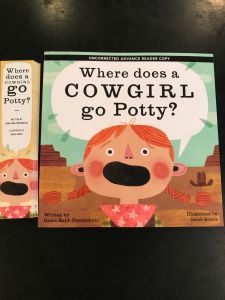
Want an Advance Release copy of Where Does a Cowgirl Go Potty?

Comment below, and/or share this post on social media, and tag @KathysQuill (FB and Twitter) and @DawnProchovnicAuthor (FB) / @DawnProchovnic (Twitter) for chances to win. I have two advanced copies along with classroom sets of bookmarks to share. I’ll give them away sometime next week!

About the Author:

Dawn Babb Prochovnic is the author of Where Does a Cowgirl Go Potty?; Where Does a Pirate Go Potty?; First Day Jitters, featured in the award-winning book, Oregon Reads Aloud; and 16 books in the Story Time with Signs & Rhymes Series, including one title that was selected as an Oregon Book Awards finalist. Dawn is a vocal advocate for school and public libraries and was honored as a 2015 Oregon Library Supporter of the Year by the Oregon Library Association. She is a frequent presenter at schools, libraries and educational conferences, and the founder of SmallTalk Learning, which provides American Sign Language and early literacy education. Dawn loves to travel and has visited thousands of potties across the Pacific Northwest and around the world. She lives in Portland, Oregon with her husband, two kids, two cats, and a feisty dog. Learn more at http://www.dawnprochovnic.com or find her on Twitter, Facebook, or Instagram.

Teacher/Librarian Guide for NITA’S FIRST SIGNS now available!

I’m so excited to share with you this printable guide to using Nita’s First Signs in the classroom or storytime! Check it out for tips and tricks for sharing signs during the story, and following up with other fun ASL activities.  Click here or on the picture below to download and print your own copy.

Check out the Nita’s First Signs homepage for a video demonstration of the signs in the story and even more links to ASL storytime and classroom activities to share!

Hands Up for Back to School!

If you’re looking for resources to share American Sign Language with your students or storytime attendees, check out the Little Hands Signing Storytime & Craft Ideas board on Pinterest! It’s where I pin my favorite ideas from around the internet for sharing ASL with kids, and gather links to my own videos showcasing signing rhymes and songs.  Check it out!

NITA’S FIRST SIGNS is available now!

“Nita’s First Signs demonstrates the value and fun of learning sign language for ALL infants, toddlers children AND adults, regardless of whether they are Deaf or hearing or hard of hearing.” – Marlee Matlin

Published by Familius Press!

  • Text by Kathy MacMillan
  • Illustrations by Sara Brezzi
  • ASL/Deaf Culture Advisor: Dr. Barbara Kannapell

American Sign Language makes it easy to communicate with your child, and Nita makes it fun! Nita’s First Signs teaches ten essential signs for every parent and child to know, including eat, more, hungry, milk, all done, ball, play, love, please, and thank you. A simple story about Nita and her parents teaches each sign in context, and repetition throughout each story makes them easy to practice. Even better, each page slides open to reveal accurate instructions on how to make each sign, plus tabs on the side of each page make it simple to locate every sign for later reference.

Makes a great baby shower gift!

Order now from the Deaf Camps, Inc. Online Bookstore (autographed copies that support a great cause!) | amazon.com | barnesandnoble.com | indiebound.org or ask for it at your local library!


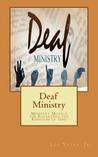
Review: DEAF MINISTRY by Leo Yates, Jr.

Deaf Ministry: Ministry Models for Expanding the Kingdom of GodDeaf Ministry: Ministry Models for Expanding the Kingdom of God by Leo Yates Jr

This book is geared to those involved in Christian ministry who wish to create or expand ministry to Deaf people within their churches. Yates begins with an overview of deafness and Deaf Culture, with a particular emphasis on how both may impact a Deaf individual’s experiences of church. He then explores various models of Deaf ministry, ranging from the Deaf Church, where the dominant language is American Sign and the liturgy may be adapted for Deaf congregations, to Interpreted Ministry, where access is provided to hearing church services and certain activities via an ASL interpreter, to Hard-of-Hearing and Late-Deafened Ministry, which focuses on access for those who do not use ASL to communicate. Yates also offers information on Deaf-blind Ministry, Deaf Advocacy, Deaf Missions, and Disability Ministry (which may or may not include the Deaf community), as well as an excellent chapter discussing the idea of the Multicultural Church, which strives to integrate the needs of Hearing, Deaf, Hard-of-Hearing, Late-deafened, and Deaf-blind individuals, and brings both hearing and Deaf culture values into its services.
Yates gives an excellent overview of the different ways that Deaf individuals may be integrated into a church community, with lots of specific resources relating to provision of interpreters, accommodations checklists, and case studies showing how other churches have done it. This is a must-have resource for anyone looking to start a Christian Deaf ministry.


Library Signs Resources

Want to learn some simple signs you can use to make serving Deaf patrons more successful?  Check out these resources!

Practice Videos by Kathy MacMillan on YouTube
Manners Signs
Library Signs 1
Library Signs 2
Library Signs 3

Library Signs Quiz Video

Library Signs Quiz Video Answer Sheet


Handouts to go with Practice Videos:
Library Signs (Vocabulary – Video 2)

Library Signs (Sentences – Videos 1 and 3)


Interested in more in-depth instruction on this topic? Check out my professional development eCourses from the American Library Association.