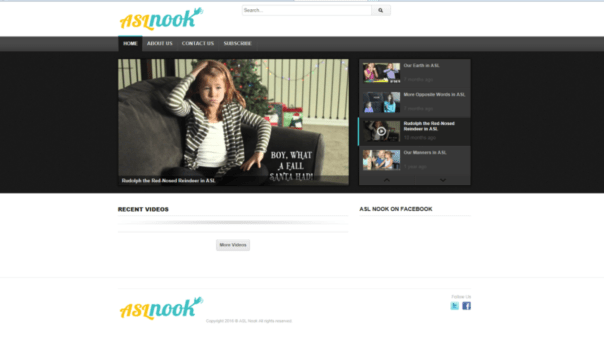
If you are interested in signing with children, don’t miss ASL Nook! Featuring Deaf adults Sheena McFeely and Manny Johnson, and two absolutely adorable little girls named Shaylee and Ivy, each short ASL Nook video features a theme, from school signs to patriotic signs to animal signs. But instead of just the here’s-the-picture, here’s-the-sign approach that so many videos use, ASL Nook presents language in context, showing the adults and children interacting. Funny, entertaining, and completely accessible to both hearing and Deaf audiences, ASL Nook is a game-changer in the world of signing with children. You can subscribe to receive updates when new videos are posted, or you can catch the videos on the website, or you can follow ASL Nook on Facebook. But whatever you do, don’t miss out!
Category Archives: Online Resources
Do you know about Project ENABLE?
Project ENABLE is the result of an extraordinary partnership between the Center for Digital Literacy, the School of Information Studies (iSchool@Syracuse) and the Burton Blatt Institute at Syracuse University. This project provides free online training modules designed for public, academic and school librarians to help them make their libraries truly inclusive for all users. Thanks to funding from the Institute of Museum and Library Services, anyone interested in creating accessibility in libraries can access these trainings, and modules can also be customized for individual or group use.
Once you sign up for a free account, you’ll take an initial assessment and then have access to five self-paced training modules, focusing on disability awareness, disability law and policy, creating an accessible library, planning inclusive programs and instruction, and assistive technology in libraries. Each module features interactive learning activities and a brief self-assessment, for a total of ten hours of instruction. Additional resources on the site include a template and checklists for a library accessibility action plan, universal design, Americans with Disability Act compliance, and sample lesson plans for school librarians. A certificate of completion is available for those who complete the training.
With training and resources of this caliber available for free, no librarian has any excuse to plead ignorance about how to provide accessibility. Sign up for a free training account today at http://projectenable.syr.edu/
TDI: Advocating for Access
by Alice Hagemeyer of Friends of Libraries for Deaf Action. Reposted with permission.
2014 is the 50th anniversary of the acoustic coupler or modem, which patent James H. Weitbrecht received in 1964, the same year he, Dr. James Marsters, and Andrew Saks founded Applied Communications Corp. Four years later in 1968, H. Latham and Nancy Breunig representing the Oral Deaf Section of the Alexander Graham Association for the Deaf and Hard of Hearing (AG Bell) and Jesse M. Smith of National Association of the Deaf (NAD) formed what is now known as TDI. Breunig was selected the first TDI president. Six years later on June 13-15, 1974, TDI had its first international conference, held in Chicago. Find out more about TDI’s work for access at http://tdiforaccess.org/
TDI eNotes is the electronic newsletter of TDI. It is distributed to subscribers and contains announcements concerning TDI events such as conferences, as well as news items pertaining to telecommunications, media, and information technology access for deaf and hard of hearing people. You may freely copy and distribute any or all portions of TDI eNotes with credit given to TDI. Anyone can subscribe to TDI eNotes, which is ABSOLUTELY FREE. You don’t have to be a member of TDI in order to receive the electronic newsletter. You can subscribe to TDI eNotes here: https://www.tdiforaccess.org/enote_subscription.aspx?key=eNote%20Subscription&select=
Hooray for Maryland’s Deaf Culture Digital Library!
On May 15, 2014, Maryland Governor Martin O’Malley signed into law a historic bill establishing the Deaf Culture Digital Library (DCDL). The mission of the DCDL, which will be run by Maryland’s Department of Library Development Services, is to provide “leadership and guidance in offering resources about deaf culture, acquiring and preserving an excellent collection of deaf resources in digital formats, and furnishing access to information regardless of location and, providing highly competent assistance to Maryland residents and library staff in local public library systems, academic librarians in colleges and universities, and other libraries in the state of Maryland.” Strategic initiatives of the Deaf Culture Digital Library include:
- Establishing the DCDL as an online central resource for Maryland library customers and staff, including information for deaf and hard-of-hearing people, parents of deaf children, and businesses and organizations providing access
- Conducting needs assessments and providing training to library staff to improve Maryland library service to deaf customers
- Developing deaf related programs and materials for libraries
- Developing and supporting alliances between libraries and key deaf-related organizations
Click here for the full text of the bill.
Congratulations to the state of Maryland for taking the lead in improving library service to the deaf community! Here’s hoping other states will follow Maryland’s lead.
Sign Language Storytelling App for Kids
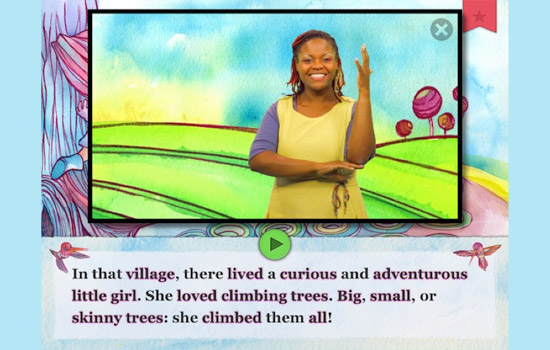
Now kids and parents, deaf and hearing alike, can enjoy and learn ASL through this cool storytelling app! An all-deaf team at the Center for Access Technology at the National Technical Institute for the Deaf, through a collaboration with Gallaudet University’s Visual Language and Visual Learning (VL2), has released “The Baobab”, the first of a series of American Sign Language/English bilingual storybook applications for iPads and Android tablets.
According to RIT University News:
“‘The Baobab’ tells a children’s story about a curious girl who goes on an adventure. Parents may read the story to their young children, and they together can watch the story with a professional deaf storyteller. Children can learn vocabulary through the 170-word index highlighted within the story. When those words are tapped, videos show the word being signed and fingerspelled…’The Baobab’ can be downloaded for $4.99 on iTunes.”
A Place Where Everyone Signed
For over 300 years, the tiny island of Martha’s Vineyard, located off the coast of Massachusetts, was something of a Deaf utopia – not because it was the bastion of a strong Deaf culture, but because it was the home of a bilingual community of hearing and deaf people, where deaf islanders participated fully in all aspects of life. That’s because the small, self-contained society had a high incidence of deafness – in the town of Chilmark, 1 in 25 residents were born deaf. This led to all members of the society using Martha’s Vineyard Sign Language (one of the seeds of modern ASL) alongside English.
Find out more in this great post from REDEAFINED: Martha’s Vineyard Sign Language (Sign without Stigma).
Or check out Nora Groce’s remarkable book, Everyone Here Spoke Sign Language:
Hereditary Deafness on Martha’s Vineyard (Harvard University Press, 1988).
It just goes to show: when communication is present, our differences no longer divide us.
ASL @ your library
Over at the ALSC Blog (the official blog of the Association for Library Services to Children, a division of the American Library Association), Renee Grassi has gathered a terrific selection of resources to for signing in the library. Says Grassi: “Just as we serve patrons in our public libraries who may speak Mandarin, Spanish, Polish, or Arabic, we may also serve those whose first language is American Sign Language. How, then, can we make our libraries an inclusive and welcoming place for those patrons? We can incorporate ASL into library services, library programming, and include it in staff training. Even if we may not notice (at first) any of our library users whose first language is ASL, we still have an opportunity to introduce and expose families to a hands-on second language that is engaging and fun. How do we do that? We learn, of course!”
Signs of Christmas
The holidays are a great time to use signs with kids – whether they’re traveling to see relatives, staying up late for midnight mass, or missing naps, holiday times can bring changes, and signing promotes security amid the chaos.
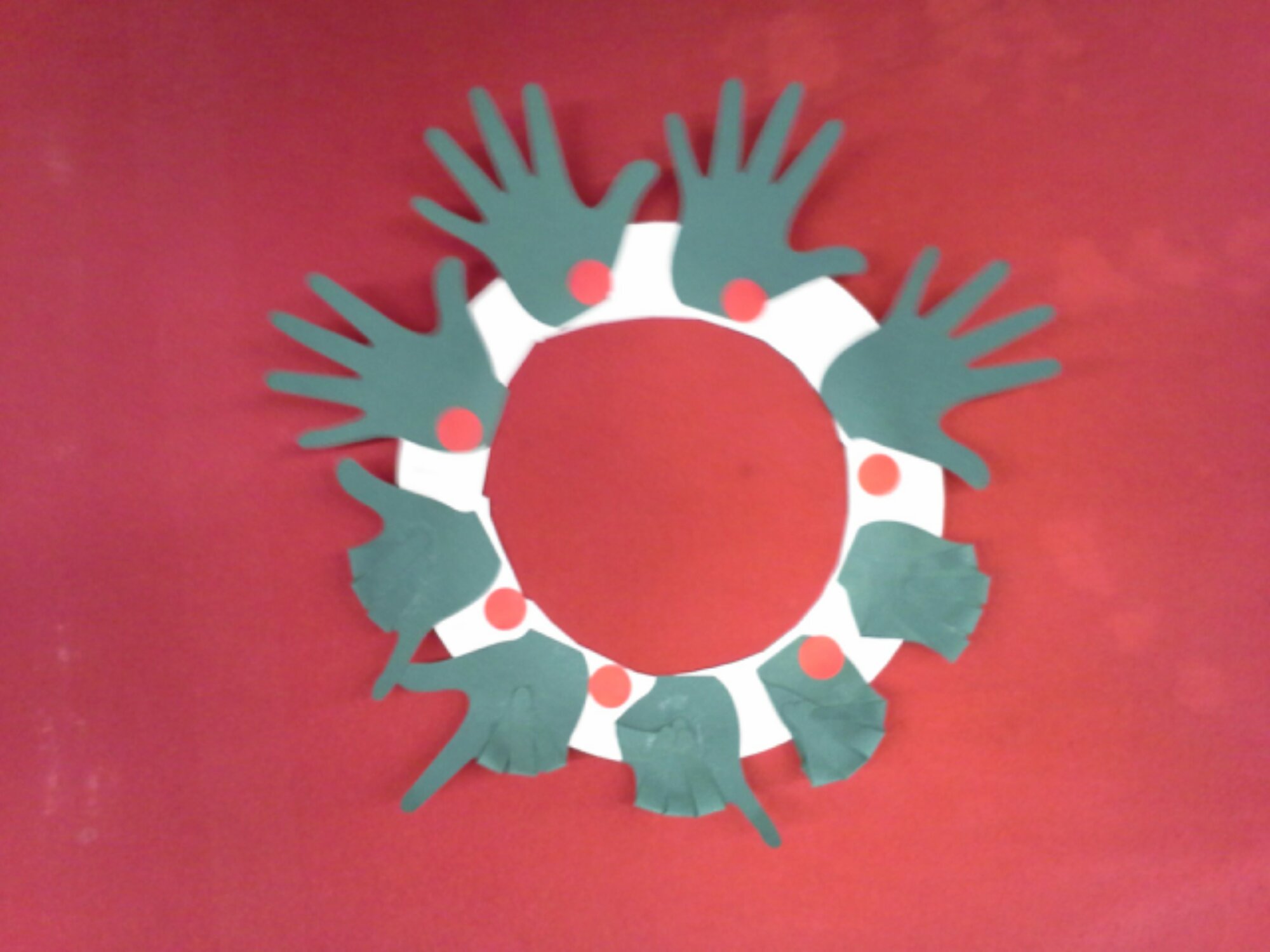
Make this ASL holiday wreath by glueing the hands into I-LOVE-YOU signs, numbers to count the days to Christmas, or letters to spell out your name! Find complete directions at http://www.storytimestuff.net.
Check out this video guide to simple Christmas signs from My Smart Hands, presented by a mom and two kids of different ages – it’s a great chance to see how those little hands actually form the signs.
Celebrating a Great Partnership: Clerc-Gallaudet Week is December 3-9
At certain times throughout history, fate has brought together people who were able to do great things together, their collaborations pushing them individually to great heights. Lennon and McCartney. Jobs and Wozniak. Twain and Tesla.
Perhaps lesser-known to many hearing Americans is a partnership that happened by fortunate accident but would go on to shape an educational system, a language, and eventually, an entire culture: that of Thomas Hopkins Gallaudet and Laurent Clerc, founders of the first permanent school for the deaf in the United States.
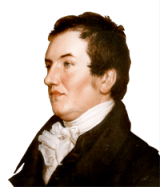
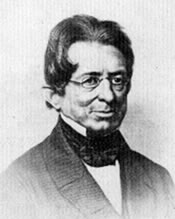
Laurent Clerc, born December 26, 1785 in the south of France, became deaf as a young child and spent his early years uneducated, with little to no communication with his hearing family members. Finally, when he was twelve years old, an uncle convinced Clerc’s parents to send him to a well-known school for the deaf in Paris, the first public school for the deaf in the world. At the school, Clerc quickly learned French Sign Language, reading, writing, philosophy, mathematics and more – so quickly that after just eight years of schooling he became a tutor and was hired as a teacher one year later. In 1815, Clerc was selected to travel to England with the head of the Paris school for a series of demonstrations of his teaching methods – a trip that would change history.
That’s because in attendance at one of those demonstrations was
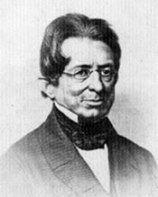
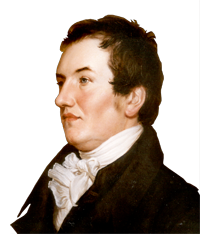
Thomas Hopkins Gallaudet, a hearing man and minister from Hartford, Connecticut who had travelled to England to research deaf education methods for a proposed school for the deaf in the United States. He had originally come to study at the Braidwood School, an institution that focused exclusively on speech and speechreading, but had been frustrated by the Braidwood family’s refusal to share their methods. When he attended the presentation by the French educators, Gallaudet knew that he had found what he needed for the American school. The Frenchmen invited Gallaudet back to Paris with them.
Gallaudet soon ran out of money, and recognized that he still had not learned enough to start the school on his own. He entreated Laurent Clerc to return to the United States with him, and Clerc, moved by the plight of the uneducated deaf children in America, agreed, abandoning the cultured halls of Paris for the wilds of the New World.
On their fifty-two day sea voyage across the Atlantic, Clerc taught Gallaudet French Sign Language, and Gallaudet taught Clerc to read and write English. In 1817, they opened the first permanent school for the deaf in Hartford, Connecticut. Some students came from the nearby island of Martha’s Vineyard, a community with its own established deaf community and sign language. Most students came from hearing families where they had eked out a few “home signs”, gestures to communicate enough to get by. But all found themselves in a rich community where Clerc’s French Sign Language blended with the signs brought by his students, forming early American Sign Language and the roots of American Deaf Culture as we know it today.
Clerc and Gallaudet went on to establish or help establish schools for the deaf in many other states, and both devoted their lives to deaf education. In December 1974, DC Public Library established Clerc-Gallaudet Week as a way of honoring Clerc and Gallaudet’s birthdays (December 26, 1785 and December 10, 1787, respectively) and promoting library awareness in the deaf community and deaf awareness in the library community.
To learn more about Clerc and Gallaudet, check out these links:
- Laurent Clerc: Apostle to the Deaf People of the New World: http://www.gallaudet.edu/clerc_center/welcome/laurent_clerc_the_man.html
- Laurent Clerc (1785-1869): http://www.lifeprint.com/asl101/topics/clerc_laurent_7.htm
- Thomas Hopkins Gallaudet: http://www.gallaudet.edu/dpn_home/thomas_hopkins_gallaudet.html
- Thomas Hopkins Gallaudet: http://www.lifeprint.com/asl101/pages-layout/gallaudet-thomas-hopkins3.htm
Learning American Sign Language Online
Looking for a great site to help you learn American Sign Language, or to supplement an in-person class? Here are three sites that fit the bill:
ASLOnline: Maintained by the University of Texas at Austin, this free online tutorial features three levels focusing on vocabulary and sentence structure in American Sign Language. Instruction takes places through videos and written text. The organization of the units mirrors the critically acclaimed Signing Naturally curriculum, making this site an ideal supplement to in-person classes.
ASL University: Maintained by Bill Vicars, this site features clear, well-structured lessons with a mixture of print information, video, and photos. It also includes lots of activities for practice and an online ASL dictionary, making this a great stop for someone looking for a casual resource or a serious student looking for structured lessons.
Start ASL: This site offers three levels of free online ASL courses, as well as a fingerspelling course. Students download a free workbook in .pdf form and use it to work through the video activities in each unit. The free courses are quite robust, but the site also offers a more in-depth paid class option for those who want to access the courses free of advertisements, with the option to submit assignments for feedback and access additional material.
Got a great ASL instruction site to recommend? Tell us about in the comments, or send an email to info@storiesbyhand.com!