All posts by kathymacmillan

The “Baby Fingers” Series: Cute AND Accurate

Over the years I have made no secret of my disappointment with a certain high-profile, slickly produced series of glossy board boards about signing with young children that completely disrespect American Sign Language and its users by mingling made-up gestures with actual signs and not indicating which is which.

That’s why I am so glad that the Baby Fingers series by Lora Heller (Sterling Publishing Company) exists!  This board book series combines adorable photos of young children signing with instructions for basic ASL signs that parents and children can use every day to make communication easier, reduce frustration, and increase bonding.  With topics ranging from feelings to signs to use throughout the day, this series proves that sign language board books can be both adorable and accurate.

51XGC94VF4L._SX258_BO1,204,203,200_51WC0-lB22L._SX258_BO1,204,203,200_51VDG86KGKL._SX258_BO1,204,203,200_51P01YZYZ5L._SX258_BO1,204,203,200_51MmAofV-gL._SX258_BO1,204,203,200_

Setting the Record Straight About American Sign Language and Deaf Culture

I love the movie Jerry Maguire – except for one scene that always makes me want to throw something.  It’s the one where Dorothy (Renee Zellweger) and Jerry (Tom Cruise) see two deaf people signing, and Dorothy says, “My favorite aunt is hearing impaired. He just said ‘You complete me’.”

What a sweet scene, right?  The line even appears later in Jerry’s big winning-Dorothy-back speech at the end.

But here’s the problem: anyone who actually knows about Deaf culture or American Sign Language doesn’t buy it.  If Dorothy’s aunt really taught her that much sign language, then she surely also taught her that many deaf people (and certainly the vast majority of ASL users) find the term “hearing impaired” offensive.  Also, what the deaf actor, Anthony Natale, signs would be rendered word-for-word as “You make me feel complete” – and it’s highly unlikely that even a skilled, experienced interpreter would come up with such a graceful interpretation as “You complete me” on the spot, let alone a character who had only learned a few signs from her aunt.  Though the moment is no doubt lovely to those who don’t know any better, to those who do it’s another example of the pervasive sentimentalization of sign language.

Read the rest of the article at KathyMacMillan.com.

ASL @ your library

Over at the ALSC Blog (the official blog of the Association for Library Services to Children, a division of the American Library Association), Renee Grassi has gathered a terrific selection of resources to for signing in the library.  Says Grassi: “Just as we serve patrons in our public libraries who may speak Mandarin, Spanish, Polish, or Arabic, we may also serve those whose first language is American Sign Language.  How, then, can we make our libraries an inclusive and welcoming place for those patrons?  We can incorporate ASL into library services, library programming, and include it in staff training.  Even if we may not notice (at first) any of our library users whose first language is ASL, we still have an opportunity to introduce and expose families to a hands-on second language that is engaging and fun.  How do we do that?  We learn, of course!”

Click here to read the complete post at the ALSC Blog.

Signs of Christmas

The holidays are a great time to use signs with kids – whether they’re traveling to see relatives, staying up late for midnight mass, or missing naps, holiday times can bring changes, and signing promotes security amid the chaos.

image

image

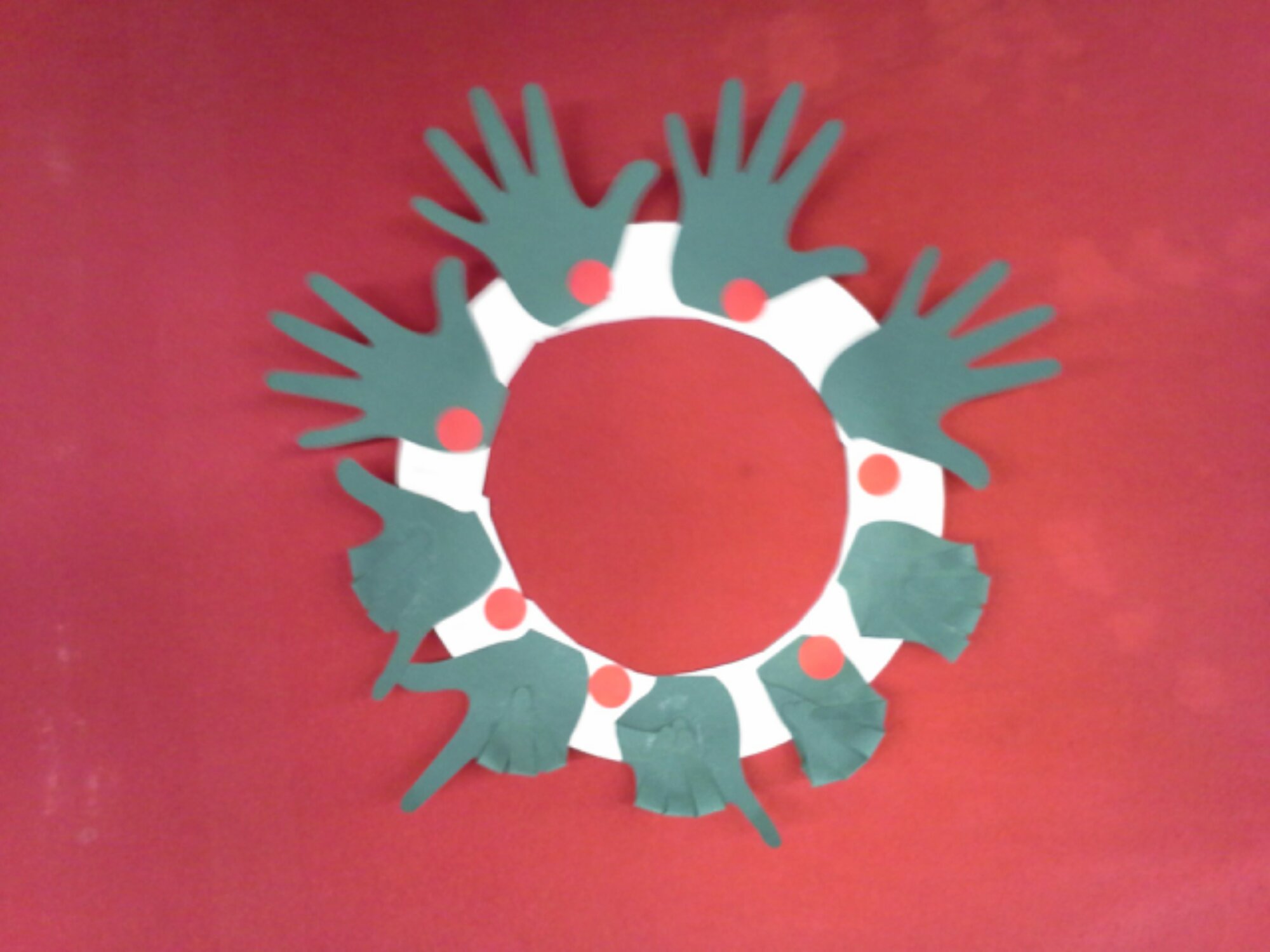
Make this ASL holiday wreath by glueing the hands into I-LOVE-YOU signs, numbers to count the days to Christmas, or letters to spell out your name! Find complete directions at http://www.storytimestuff.net.

Check out this video guide to simple Christmas signs from My Smart Hands, presented by a mom and two kids of different ages – it’s a great chance to see how those little hands actually form the signs.

Little Hands Signing in the News

imagesIn conjunction with my “Little Hands Signing: Holiday Signs” program at the Eldersburg Library on Thursday, December 19 at 9:45 am and 10:45 am, the Eldersburg Advocate has published this terrific article by Jeremy Bauer-Wolf about my Little Hands Signing classes:

When Kathy MacMillan was children’s services supervisor of the Eldersburg branch of Carroll County Public Library, she encountered a deaf kindergarten teacher who would come in seeking storybooks for her students. MacMillan decided she wanted to communicate with her, which led her to enroll in a basic American Sign Language course at the Catonsville campus of Baltimore County Community College.
Thirteen years later, after a stint teaching at the Maryland School for the Deaf, MacMillan is a certified ASL interpreter and a published author. She no longer is full-time at the Eldersburg branch, but said she still tries to host programs there monthly as substitute staff, to teach children and adults basic sign language and its benefits.
“I love to go back to teach,” MacMillan said. “Everyone is welcome.”

Click here to read the rest of the article.

Celebrating a Great Partnership: Clerc-Gallaudet Week is December 3-9

At certain times throughout history, fate has brought together people who were able to do great things together, their collaborations pushing them individually to great heights.  Lennon and McCartney.  Jobs and Wozniak.  Twain and Tesla.

Perhaps lesser-known to many hearing Americans is a partnership that happened by fortunate accident but would go on to shape an educational system, a language, and eventually, an entire culture: that of Thomas Hopkins Gallaudet and Laurent Clerc, founders of the first permanent school for the deaf in the United States.

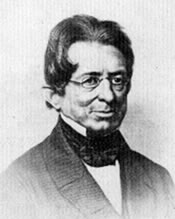
clercLaurent Clerc, born December 26, 1785 in the south of France, became deaf as a young child and spent his early years uneducated, with little to no communication with his hearing family members.  Finally, when he was twelve years old, an uncle convinced Clerc’s parents to send him to a well-known school for the deaf in Paris, the first public school for the deaf in the world.  At the school, Clerc quickly learned French Sign Language, reading, writing, philosophy, mathematics and more – so quickly that after just eight years of schooling he became a tutor and was hired as a teacher one year later.   In 1815, Clerc was selected to travel to England with the head of the Paris school for a series of demonstrations of his teaching methods – a trip that would change history.

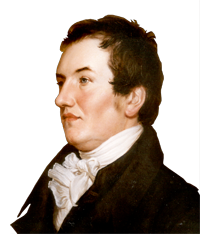
That’s because in attendance at one of those demonstrations was thgallaudet-portraitThomas Hopkins Gallaudet, a hearing man and minister from Hartford, Connecticut who had travelled to England to research deaf education methods for a proposed school for the deaf in the United States.  He had originally come to study at the Braidwood School, an institution that focused exclusively on speech and speechreading, but had been frustrated by the Braidwood family’s refusal to share their methods.  When he attended the presentation by the French educators, Gallaudet knew that he had found what he needed for the American school.  The Frenchmen invited Gallaudet back to Paris with them.
Gallaudet soon ran out of money, and recognized that he still had not learned enough to start the school on his own.  He entreated Laurent Clerc to return to the United States with him, and Clerc, moved by the plight of the uneducated deaf children in America, agreed, abandoning the cultured halls of Paris for the wilds of the New World.

On their fifty-two day sea voyage across the Atlantic, Clerc taught Gallaudet French Sign Language, and Gallaudet taught Clerc to read and write English.  In 1817, they opened the first permanent school for the deaf in Hartford, Connecticut.  Some students came from the nearby island of Martha’s Vineyard, a community with its own established deaf community and sign language.  Most students came from hearing families where they had eked out a few “home signs”, gestures to communicate enough to get by.  But all found themselves in a rich community where Clerc’s French Sign Language blended with the signs brought by his students, forming early American Sign Language and the roots of American Deaf Culture as we know it today.

Clerc and Gallaudet went on to establish or help establish schools for the deaf in many other states, and both devoted their lives to deaf education.  In December 1974, DC Public Library established Clerc-Gallaudet Week as a way of honoring Clerc and Gallaudet’s birthdays (December 26, 1785 and December 10, 1787, respectively) and promoting library awareness in the deaf community and deaf awareness in the library community.

To learn more about Clerc and Gallaudet, check out these links:


Signing Helps Young Children Understand Feelings

pumpkinHalloween is the perfect time to talk about feelings with young children – and American Sign Language is a wonderful way to help children connect visual cues with feeling concepts, to help them develop an understanding of their own feelings as well as empathy for the feelings of others.  Here’s a fun song to introduce feeling signs to kids.  Extend the activity by drawing a simple pumpkin face on a whiteboard and asking the child to help you draw the appropriate expressions for each feeling.

“Pumpkin Feelings” (Click on the links to see videos of the key signs)

If you’re a happy pumpkin, clap your hands.

If you’re a happy pumpkin, clap your hands.

If you’re a happy pumpkin, then your face will show us something, so

If you’re a happy pumpkin, clap your hands.

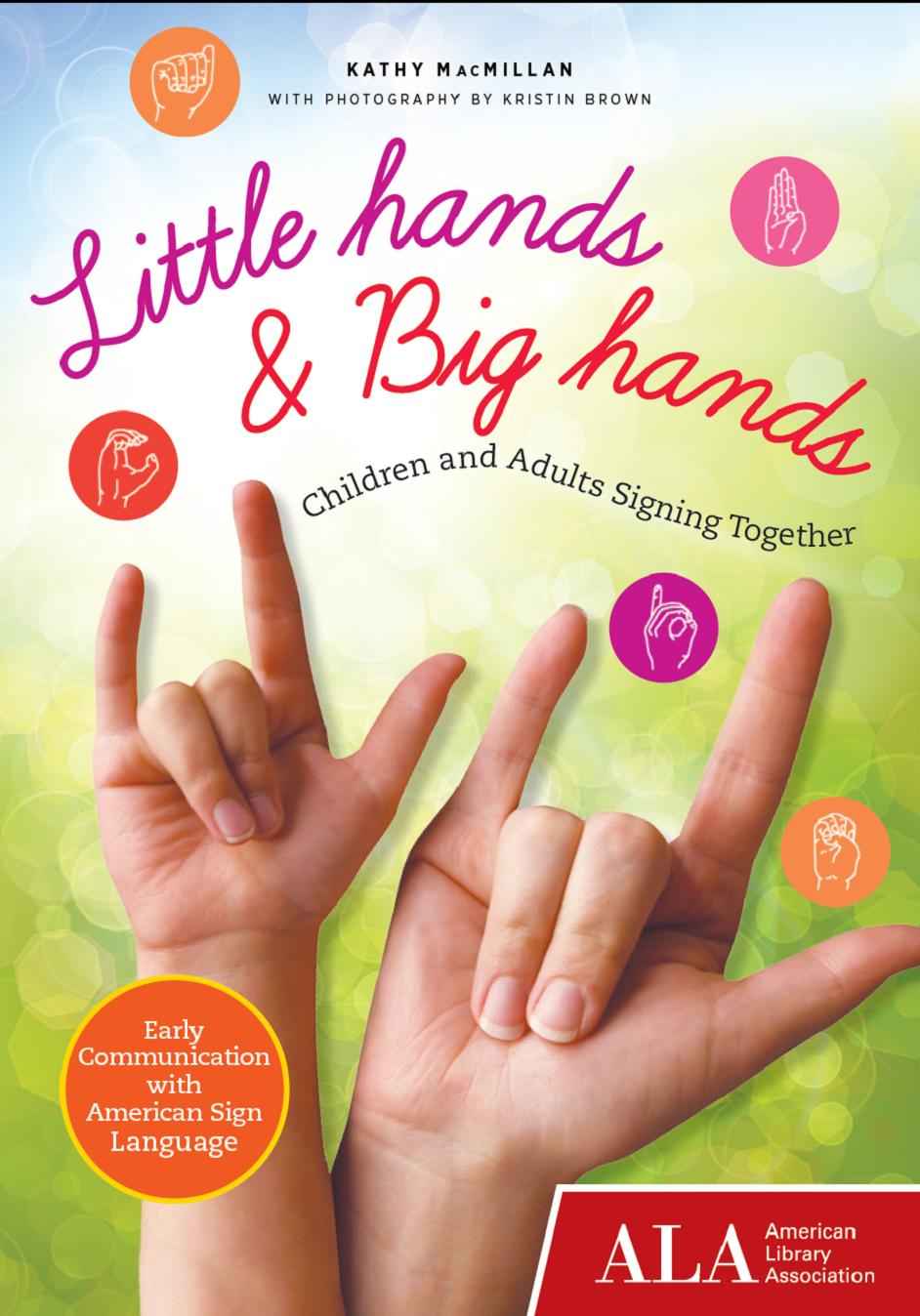
Little Hands and Big Hands coverFind more hands-on signing activities like this one in Little Hands and Big Hands: Children and Adults Signing Together by Kathy MacMillan, photographs by Kristin Brown.  (Huron Street Press, 2013).

Learning American Sign Language Online

picture of computerLooking for a great site to help you learn American Sign Language, or to supplement an in-person class?  Here are three sites that fit the bill:

ASLOnline: Maintained by the University of Texas at Austin, this free online tutorial features three levels focusing on vocabulary and sentence structure in American Sign Language.  Instruction takes places through videos and written text.  The organization of the units mirrors the critically acclaimed Signing Naturally curriculum, making this site an ideal supplement to in-person classes.

ASL University: Maintained by Bill Vicars, this site features clear, well-structured lessons with a mixture of print information, video, and photos.  It also includes lots of activities for practice and an online ASL dictionary, making this a great stop for someone looking for a casual resource or a serious student looking for structured lessons.

Start ASL: This site offers three levels of free online ASL courses, as well as a fingerspelling course.  Students download a free workbook in .pdf form and use it to work through the video activities in each unit.  The free courses are quite robust, but the site also offers a more in-depth paid class option for those who want to access the courses free of advertisements, with the option to submit assignments for feedback and access additional material.

Got a great ASL instruction site to recommend?  Tell us about in the comments, or send an email to info@storiesbyhand.com!

How Signing Enhances Early Literacy

Excerpted from Little Hands and Big Hands: Children and Adults Signing Little Hands and Big Hands coverTogether by Kathy MacMillan (Chicago, IL: Huron Street Press, 2013)

Whenever you communicate with your child in an involving way, you are helping her develop early literacy skills.  Because signing encourages communication and engagement, it supports early literacy.  But that’s not the only way signing helps your child develop language and literacy skills.  In her groundbreaking book, Dancing with Words: Signing for Hearing Children’s Literacy (2001), Marilyn Daniels describes her research on using American Sign Language in preschool classrooms with hearing children.  More often than not, her research was disrupted when the parents of her control group (a preschool classroom where the teacher was not using sign language with the students) heard about the amazing gains the signing classrooms in the study were making, and insisted that their children be exposed to sign too!   She found that hearing preschoolers and kindergarteners in the signing groups achieved significantly higher scores on the Peabody Picture Vocabulary Test than those who knew no sign.  In addition, teachers in the signing classroom reported that their students were less frustrated, got along better, and were more excited about learning than their previous, non-signing classes.

How did signing with these groups produce such extraordinary results?

  • Sign language supports different learning styles.  Signs provide a visual cue and give kinesthetic learners, who learn best through physical activity, a way to interact with letters and vocabulary.
  • Knowing the names of the letters of the alphabet is an important first step on the road to literacy.  Using the manual alphabet with children helps them learn, remember, and use the letters – long before they have developed the fine motor skills to write them clearly.
  • As children move into the preschool and early elementary years, knowing signs and the manual alphabet allows them to access two different “memory stores” in their brains for reading, spelling, and vocabulary.  For example, if a child cannot identify a letter’s sound, signing it to himself may help jog his memory to make the connection.
  • American Sign Language, like any language, stimulates the language centers of the brain, strengthening synaptic connections and preparing them for further language learning.
  • Young children tend to be more visually attuned than adults, and so signing to them naturally captures their attention.  In addition, our visual sense works best when our eyes are moving, as when one is observing signs.
  • The areas of the brain that control movement develop earlier than those that control speech.  This is why even six to seven month old babies can produce signs.  As children grow up, their motor centers continue to develop ahead of their speech centers, allowing them to express more thoughts more clearly through signs than they can through speech.
  • Adults tend to use writing as a way to process and understand information.  Young children do not have access to this tool yet, but they can use signs to serve the same function.
  • The hands are connected to the brain.  Developing the tactile sense (touch) and the kinesthetic sense (movement) helps the different hemispheres of the brain communicate with one another, allowing for more seamless processing of information.
  • Before children can understand the abstract shapes of letters, they must first develop their proprioceptive system, or a sense of where they are in space.  When a child moves, proprioceptive development is triggered as muscles, joints, and tendons make contact and brain connections develop (Johnson 2007).  The movement of signs naturally encourages proprioceptive development.
  • Signing in itself seems to be intrinsically motivating for children; as one United Kingdom study reports, “Children’s motivation for acquiring basic signing skills does not appear to stem from interaction with Deaf children or adults as much as from the language itself” (Daniels 2003).
  • Signing with children facilitates a sense of play.  Play is far more than just simple entertainment – it is the number one way children learn about the world in the first five years of life.  Play allows children to make connections between concepts and understand how the pieces of the world fit together – and if children figure these things out for themselves, the resulting brain connections last far longer than if they had received direct instruction.

For more about the benefits of signing with young children, as well as fun signing activities to use with children, see Little Hands and Big Hands: Children and Adults Signing Together by Kathy MacMillan (Chicago, IL: Huron Street Press, 2013), available now!