Category Archives: Resources for Educators and Librarians

Recommended DVD Series: Sign with Robert

I have been writing reviews of ASL materials for School Library Journal for several years now.  Whenever I get a new one, I tense a little with worry – there are some frankly awful sign language DVDs out there.

That’s why it’s such a thrill when I get to review a series that I can review as enthusiastically as this one.  Sign with Robert is well-planned-out, well-executed, and always mindful of the needs of its audience.

10-dvd-set-mmjkjn6ya0tjntjnec4wrqzdqgqz6ozstycdzcadjc

Here’s some of what I had to say in my review:

“This excellent series goes far beyond the usual introductions to American Sign Language (ASL) to create value for multiple audiences. Deaf actor and educator Robert DeMayo brings his native ASL fluency to the demonstrations of signs and discussion of culture, and the series features a clean visual style that keeps the focus on the language. The vocabulary segments go into far greater depth than most ASL materials, making the series valuable to advanced signers and interpreters as well as beginners.”

Sign with Robert is available as a 10-volume series, or by individual discs or streaming episodes.  Voiceovers and open captions are used where necessary to make sure everyone has access.


Recommended Viewing: The Sign Language Storytelling Series from Weston Woods

These excellent videos are perfect for both Deaf and hearing families!  Native signers Missy Keast and Manny Hernandez appear in front of the pictures and English text, telling the story on each page in American Sign Language.  Weston Woods, long known for its high-quality visual adaptations of picture books, applies its signature style to these DVDs, making them fully accessible for both Deaf audiences and hearing non-signers.  Each DVD also features:

  • optional English text on screen and English voiceover
  • a vocabulary section showing featured signs in isolation, arranged alphabetically by English translation
  • a 10-question quiz that assesses comprehension and memory
  • an optional read-along feature that highlights each word as it is spoken

Titles available in this series:

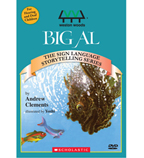
es Very Young Vol 1 DVDBig Al by Andrew Clements, illustrated by Yoshi: Big Al is large and scary-looking , so the little fish are afraid of him.Then he gets to prove what a good friend he can be!


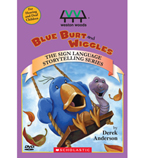
s Very Young Vol 1 DVDBlue Burt and Wiggles by Derek Anderson: An unusual friendship develops between a bird and a worm, showing how common concerns lead to unusual friendships.


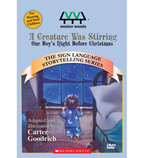
9780977097470_lgA Creature Was Stirring by Carter Goodrich: A little boy says that, despite what everyone thinks, he was the only creature stirring in the house that Christmas Eve.


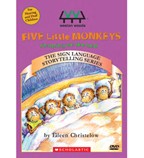
ies Very Young Vol 1 DVDFive Little Monkeys Jumping on the Bed by Eileen Christelow: As soon as they say goodnight to Mama, five little monkeys start to jump on their bed. But trouble lies ahead.


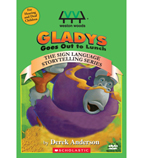
s Very Young Vol 1 DVDGladys Goes Out to Lunch by Derek Anderson: One day Gladys smells something delicious and leaves the zoo to find out what it is…and the adventure begins.


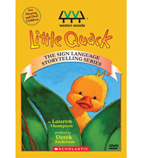
ies Very Young Vol 1 DVDLittle Quack by Lauren Thompson: Splish! Splash! Splosh! Can Little Quack find the courage to join his brothers and sisters in the pond?


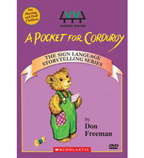
ies Very Young Vol 1 DVDA Pocket for Corduroy by Don Freeman: Corduroy, a lovable stuffed bear, gets lost. After an all-night adventure he is rescued by his owner.


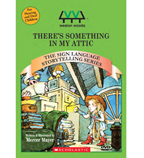
ies Very Young Vol 1 DVDThere’s Something in My Attic by Mercer Mayer: A brave little girl captures a ngihtmare to show her parents that there really is something in the attic.


You Simply Must Meet ASL Nook!

aslnook

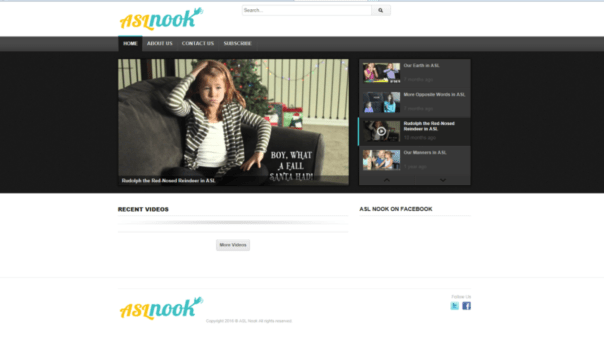
If you are interested in signing with children, don’t miss ASL Nook!  Featuring Deaf adults Sheena McFeely and Manny Johnson, and two absolutely adorable little girls named Shaylee and Ivy, each short ASL Nook video features a theme, from school signs to patriotic signs to animal signs.  But instead of just the here’s-the-picture, here’s-the-sign approach that so many videos use, ASL Nook presents language in context, showing the adults and children interacting.  Funny, entertaining, and completely accessible to both hearing and Deaf audiences, ASL Nook is a game-changer in the world of signing with children. You can subscribe to receive updates when new videos are posted, or you can catch the videos on the website, or you can follow ASL Nook on Facebook. But whatever you do, don’t miss out!

Update on Maryland’s Deaf Culture Digital Library

The following is shared with permission.

DEAF CULTURE DIGITAL LIBRARY FACT SHEET

February 2016

The Maryland State Department of Education/Division of Library Development and Services and Montgomery County Public Libraries would like to share information on the progress of the Deaf Culture Digital Library.

The Deaf Culture Digital Library, the result of a bill that was passed into law, is the “first stop” information center that will provide Maryland residents, local public library staff, college and university librarians and other libraries in the state of Maryland with access to online resources on deaf culture, a comprehensive electronic collection of deaf resources, deaf cultural programs, and training programs for library staff.

Current Status

* The groundwork to formalize the foundation of the Deaf Cultural Digital Library is in progress. A letter of agreement between the Maryland State Department of Education/Division of Library Development and Services and Montgomery County Public Libraries (MCPL) is in progress.
* The job descriptions are currently being written and refined.

* The Division of Library Development and Services (DLDS) is working with MCPL to establish procedures to formalize the DCDL Advisory Board. DLDS will begin taking applications for membership late February 2016. The majority of board members are required to be deaf or hard of hearing and will be selected from the following entities:

  1. County library systems
  2. The Division of Library Development and Services
  3. The Governor’s Office for the Deaf and Hard of Hearing
  4. Statewide deaf and hard of hearing organizations; and,
  5. Other organizations as agreed upon by the Governor’s Office for the Deaf and Hard of Hearing and the Division of Library Development and Services

* Board members will then recruit members for the Deaf Culture Digital Library “Friends of the Library.” These individuals are expected to be strongly committed, well-positioned and able to promote community involvement, advocacy, and funding for the DCDL.

* Additional details will be announced as they become available during the months ahead.

* For more information about the Deaf Culture Digital Library, contact Susan Cohen at 301-637-2964 (videophone) or Irene Padilla, 410-767-0434.

Background

* In the 2012 Regular Session, the Maryland General Assembly passed a bill establishing a Task Force to Study the Establishment of a Deaf Culture Digital Library. http://mgaleg.maryland.gov/2012rs/bills/sb/sb0571e.pdf

* In September 2013 the eleven member task force, established to study the feasibility of the DCDL proposal, submitted a report with recommendations to the Governor. The final report to the Governor on the Deaf Culture Digital Library may be seen at: http://tinyurl.com/o3dcb7o.

*On May 15, 2014, the Maryland General Assembly passed the bill to create the Deaf Culture Digital Libraryhttp://mgaleg.maryland.gov/webmga/frmMain.aspx?id=hb0653&stab=01&pid=billpage&tab=subject3&ys=2014rs.

The credit for the concept of the library goes to numerous advocates including Alice Hagemeyer, Silver Spring Library resident and longtime advocate for the deaf community to have equal access to library services. Ms. Hagemeyer is the president and founder of the Friends of the Library for Deaf Action.
Frequently Asked Questions (FAQ)

1. Who selected MCPL as the site of the Deaf Cultural Digital Library?

The Division of Library Development and Services of the Maryland State Department of Education selected Montgomery County Public Libraries (MCPL) to manage the Deaf Cultural Digital Library (DCDL) for the state of Maryland.
2. Why was MCPL selected as the site of the DCDL?

MCPL was selected as the site of the DCDL due to its long history of providing library services to people who are deaf and hard of hearing including communication access, deaf resources, collections of materials for, by, and about people who are deaf and hard of hearing, and programs featuring deaf authors and speakers on topics related to deaf culture, and coping with hearing level changes due to aging. These services are renowned throughout the State of Maryland and across the nation.
3. Who will take the lead on this project?

Susan Cohen, Librarian II, at Montgomery County Public Libraries, will serve as the DCDL Project Coordinator. Ms. Cohen, who is deaf, has expertise in delivering library services to the deaf and hard of hearing community, deaf resources, and a long history of connections with the deaf and hard of hearing community.
4. How will this library be funded and how many staff will be hired?

State funding for the DCDL includes personnel and other resources. Two full-time library staff members will be hired to help coordinate, organize and monitor the program. The librarian is required to be a deaf or hard of hearing individual, eligible for Professional Public Librarian Certification issued by the State Superintendent of Schools, and knowledgeable about library, literacy and accessibility related issues of deaf and hard of hearing individuals.
5. How will the two staff positions support the DCDL?

Staff members in these positions will help plan and develop deaf cultural programs, give presentations about DCDL to Maryland residents and library staff, showcase library services at deaf conferences, develop and maintain the DCDL website, coordinate training sessions for library staff statewide, and support and facilitate vital statewide partnerships.


6. Where will the DCDL be located?

The DCDL, an online resource, will be available virtually to Maryland residents and library staff throughout the state of Maryland. DCDL staff will be based at the Germantown Library.

References to Legislation and Statute

Task Force Bill (SB 571): http://mgaleg.maryland.gov/2012rs/bills/sb/sb0571e.pdf

DCDL Established (HB 653): http://mgaleg.maryland.gov/webmga/frmMain.aspx?id=hb0653&stab=01&pid=billpage&tab=subject3&ys=2014rs


Chapter 606: http://mgaleg.maryland.gov/2014RS/chapters_noln/Ch_606_hb0653E.pdf

Statute 23-108: http://mgaleg.maryland.gov/webmga/frmStatutesText.aspx?article=ged&section=23-108&ext=html&session=2016RS&tab=subject5

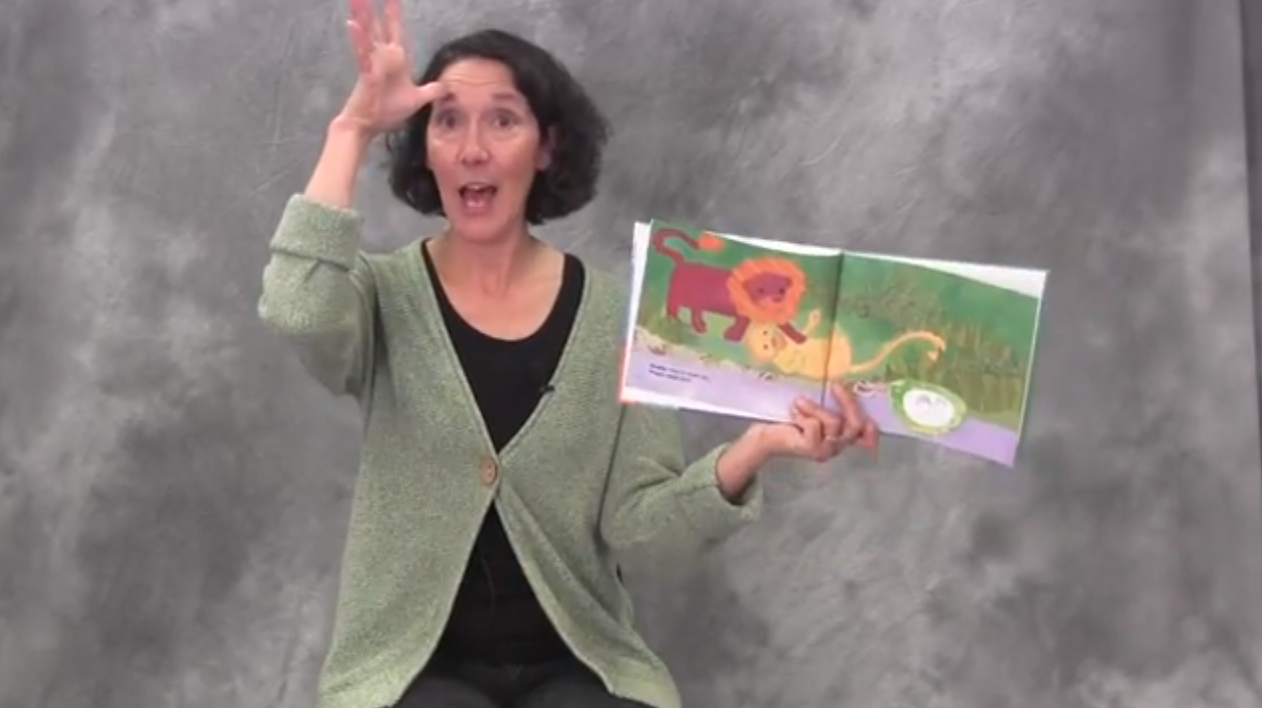
Woodpecker, Woodpecker: A Signing Rhyme

Woodpecker, Woodpecker: A Signing Rhyme

Direct Link: https://youtu.be/YCT3FEC-ZY4

Begin by teaching the ASL signs TREE and BIRD. Explain that in this rhyme, you will be learning about a specific kind of bird called a woodpecker, and will be using the signs to show how the woodpecker uses the tree.

Woodpecker, woodpecker, time to eat! (sign BIRD)

Woodpecker, woodpecker, fly to the tree. (sign TREE with your other hand and move the BIRD to your forearm)

Tap-tap-tap-tap-tap-tap-tap-tap-tap-tap-tap-tap-tap! (make the bird’s beak tap quickly on your forearm, which represents the tree trunk)

Now eat up the bugs you found, just like that. (move fingers to show beak eating bugs)

Woodpecker, woodpecker, time to sleep! (sign BIRD)

Woodpecker, woodpecker, fly to the tree. (sign TREE with your other hand and move the BIRD to your forearm)

Tap-tap-tap-tap-tap-tap-tap-tap-tap-tap-tap-tap-tap! (make the bird’s beak tap quickly on your forearm, which represents the tree trunk)

Now nestle in the hole you made, cozy as can be! (nestle bird in palm of hand)

MacMillan_cover_1p.inddFind lots more great storytime activities in More Storytime Magic, the latest volume in the Storytime Magic series!
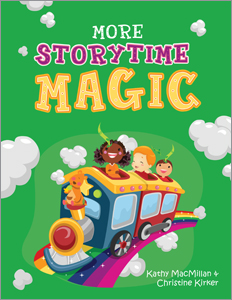
More Storytime Magic

MacMillan_cover_1p.inddMore Storytime Magic

by Kathy MacMillan and Christine Kirker

ALA Editions, December 29, 2015.  $52.00

Order now from the Deaf Camps, Inc. Online Bookstore (autographed copies that support a great cause!) or the ALA Store.

“MacMillan and Kirker continue their successful formula for helping librarians and others who plan stories and activities for children aged two and up…a welcome addition for public and school library professional collections.” – American Reference Books Annual

“Another excellent resource from this author pair, this title presents songs, stories, and activities arranged by themes, such as fairy tales, animals, friends, and food. The stories and songs include originals and adaptations alike, and many of the tunes are sung to well-known traditional songs…For those who wish to specify the elements of Common Core State Standards (CCSS) demonstrated in storytime, the coding found with each activity is helpful…With fun activities and timely information on the CCSS, this is an ideal choice for administrators, librarians, and parents eager to promote current literacy standards.” – School Library Journal

“The authors do a very good job of providing activities that can be used for different age groups as well as different time allotments and settings.” – School Library Connection

“…a worthwhile purchase for any youth department where there is a focus on storytime.” – Booklist

MacMillan and Kirker’s knack for creating storytimes that engage and delight young ones have made their previous books bestsellers. Now they’re back with an all new assortment of original fingerplays, transitional rhymes, movement songs, flannelboards, sign language rhymes and other activities to spice up storytimes for ages two and up. This ready-to-go sourcebook for children’s librarians, early literacy specialists, and other adults who work with young children offers everything needed to plan and host quality storytimes, including

  • more than a dozen thematic groupings of activities, featuring such fun topics such as “All About Me,” “Bugs and Insects,” “Fairy Tales and Castles,” and “People in my Neighborhood”;
  • recommended storytime books for each theme, along with material lists, patterns for flannelboards and stick puppets, and illustrations of American Sign Language signs; and
  • coding for each entry indicating which Common Core State Standards for Kindergarten skills it supports.

Using the guidance and activities contained in this book, storytimes will be more magical than ever!

New Developments for Maryland’s Deaf Culture Digital Library

Things are moving ahead for Maryland’s Deaf Culture Digital Library, the first of its kind in the country!  Congratulations to Montgomery County Public Library for being selected to host this amazing resource.

Here’s the latest press release:

For Immediate Release: 6/22/2015

Montgomery County Public Libraries Selected to Manage Maryland’s Deaf Culture Digital Library

County Executive Ike Leggett has announced that Montgomery County Public Libraries (MCPL)has been selected by the Maryland State Division of Library Development and Services (MS-DLDS) as the site of the State’s Deaf Culture Digital Library (DCDL).“This is a true honor for Montgomery County Public Libraries,” Leggett said. “It is a well-deserved recognition of our library system’s long tradition of helping to identify and address the needs of the deaf and hard-of-hearing community for resources, collections, programs and technologies.”

Irene Padilla, assistant state superintendent of Libraries (Division of Library Development and Services) said, “Montgomery County Public Libraries’ services are renowned throughout the state of Maryland and across the nation. We are excited that MCPL has agreed to work with the MS-DLDS to ensure that the Deaf Culture Digital Library is the ‘first stop’ information center that will furnish statewide access to deaf resources. DCDL will provide highly competent assistance to Maryland residents and library staff in local public library systems, academic librarians in colleges and universities, and other libraries in the State of Maryland.”

“It’s a privilege and honor to be selected as a site for the DCDL,” said MCPL Director Parker Hamilton. “The Deaf Culture Digital Library is important to MCPL and the community, because it will improve availability and access to a comprehensive collection on deaf culture and programs that will help lead to better appreciation and awareness of deaf culture and the deaf community. We look forward to making resources more readily available to customers in the State of Maryland.”

The groundwork to formalize the foundation of the Deaf Culture Digital Library will take place in 2016, beginning with formation of the DCDL Advisory Board. The Division of Library Development and Services will begin taking applications for membership on the Board in the fall. The Deaf Culture Digital Library will be staffed with a full-time coordinator and an assistant. Additional details will be announced as they become available during the months ahead.

The final report to the Governor on the Deaf Culture Digital Library may be seen at:
http://tinyurl.com/o3dcb7o.

For more information about the Deaf Culture Digital Library, contact Susan Cohen at 301-637-2964 or Irene Padilla, 410-767-0444.

Release ID: 15-250
Media Contact: Bonnie Ayers 240-777-6507

Do you know about Project ENABLE?

logo

Project ENABLE is the result of an extraordinary partnership between the Center for Digital Literacy, the School of Information Studies (iSchool@Syracuse) and the Burton Blatt Institute at Syracuse University. This project provides free online training modules designed for public, academic and school librarians to help them make their libraries truly inclusive for all users. Thanks to funding from the Institute of Museum and Library Services, anyone interested in creating accessibility in libraries can access these trainings, and modules can also be customized for individual or group use.

Once you sign up for a free account, you’ll take an initial assessment and then have access to five self-paced training modules, focusing on disability awareness, disability law and policy, creating an accessible library, planning inclusive programs and instruction, and assistive technology in libraries. Each module features interactive learning activities and a brief self-assessment, for a total of ten hours of instruction. Additional resources on the site include a template and checklists for a library accessibility action plan, universal design, Americans with Disability Act compliance, and sample lesson plans for school librarians. A certificate of completion is available for those who complete the training.

With training and resources of this caliber available for free, no librarian has any excuse to plead ignorance about how to provide accessibility. Sign up for a free training account today at http://projectenable.syr.edu/

Wordless Picture Books – Something for Everyone!

I am so pleased to share with you this article by my good friend, early childhood educator Louise Rollins of Maryland/DC Hands & Voices.  Though this article specifically addresses techniques for using wordless picture books with deaf and hard of hearing children, these ideas will benefit hearing children as well.  So if you thought wordless picture books couldn’t make for a satisfying storytime – think again!  This article originally appeared in the Hands & Voices Communicator, Summer 2015, Volume XVIV, Issue 4 and is posted here with permission.

******

When you search for books for your child, you can identify high-quality children’s books in part because they convey much of the story through the pictures. This is especially important for children who are learning language, as our deaf or hard of hearing children are, since they may not always understand the story through language alone. Wordless picture books are a category of books with very little or no text, where the story is conveyed entirely through the pictures. The same skills that children practice while reading books with text can apply: retelling, understanding story structure, taking multiple perspectives, and making predictions, inferences, and personal connections. Additionally, wordless picture books present unique benefits for deaf or hard of hearing children using any communication modality.

Wordless picture books are excellent for helping your child understand the sequence of events in the story. During book sharing with a traditional book, a child sees part of the story in the picture and perhaps understands part of the story through the text that is read to her, then has to piece together a narrative from those two fractured elements, filling in the blanks on her own as she is able. Using a wordless picture book, your child can understand the events through the picture first, then learn from you the language that describes what she sees. This process helps develop your child’s story comprehension and build her vocabulary.

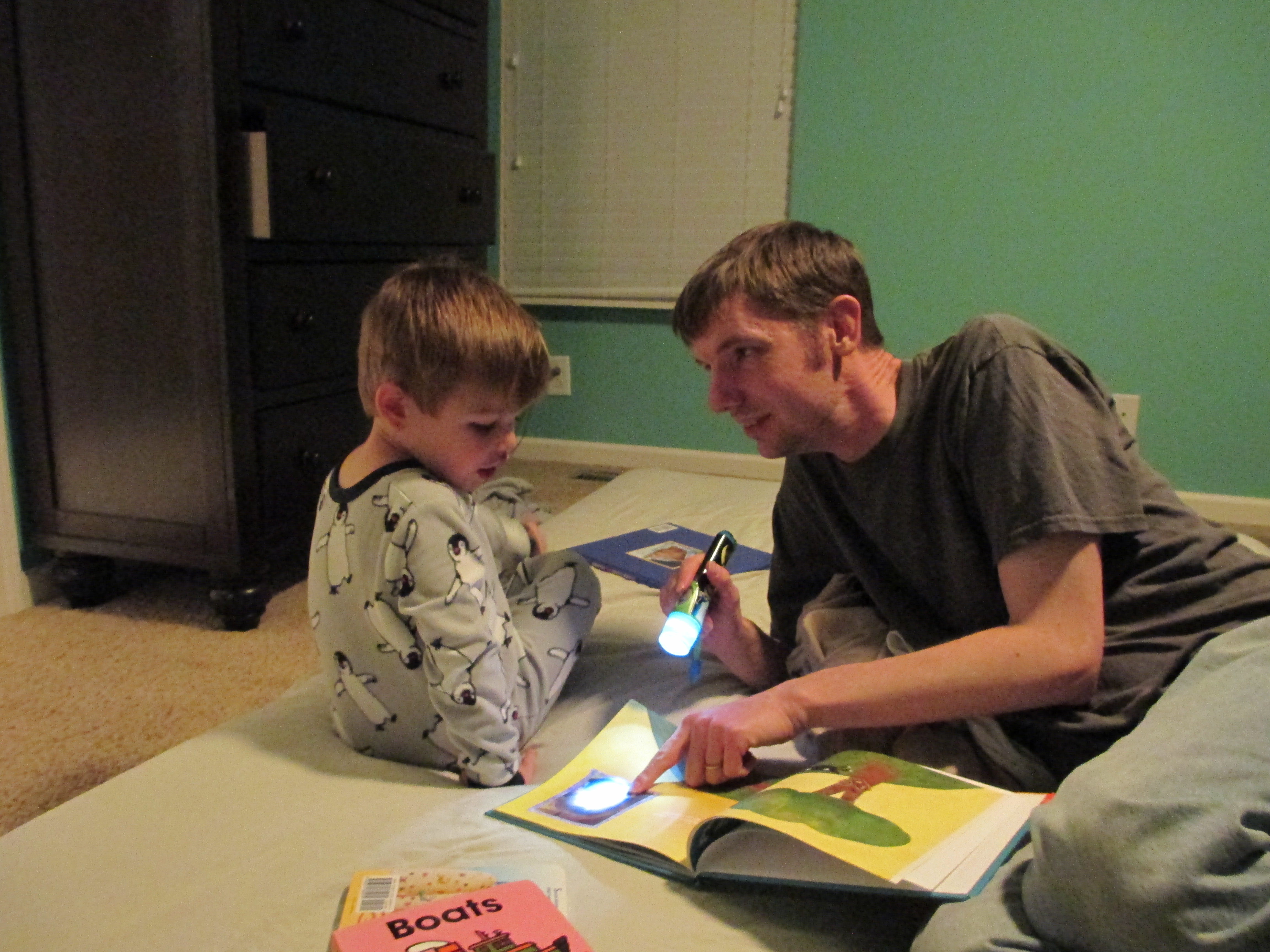
IMG_2946Because the pictures may be open to some interpretation, wordless picture books create an interactive reading experience where you and your child can discuss what you think is happening in the story. You can encourage your child to take on the role of narrator; even if your child cannot read print yet he can “read” these books independently or to you. Storytelling opportunities help your child practice organizing his thoughts, including sufficient information for his audience, and selecting relevant details. In other words, while practicing reading, your child is also practicing important writing skills, without even picking up a pencil.

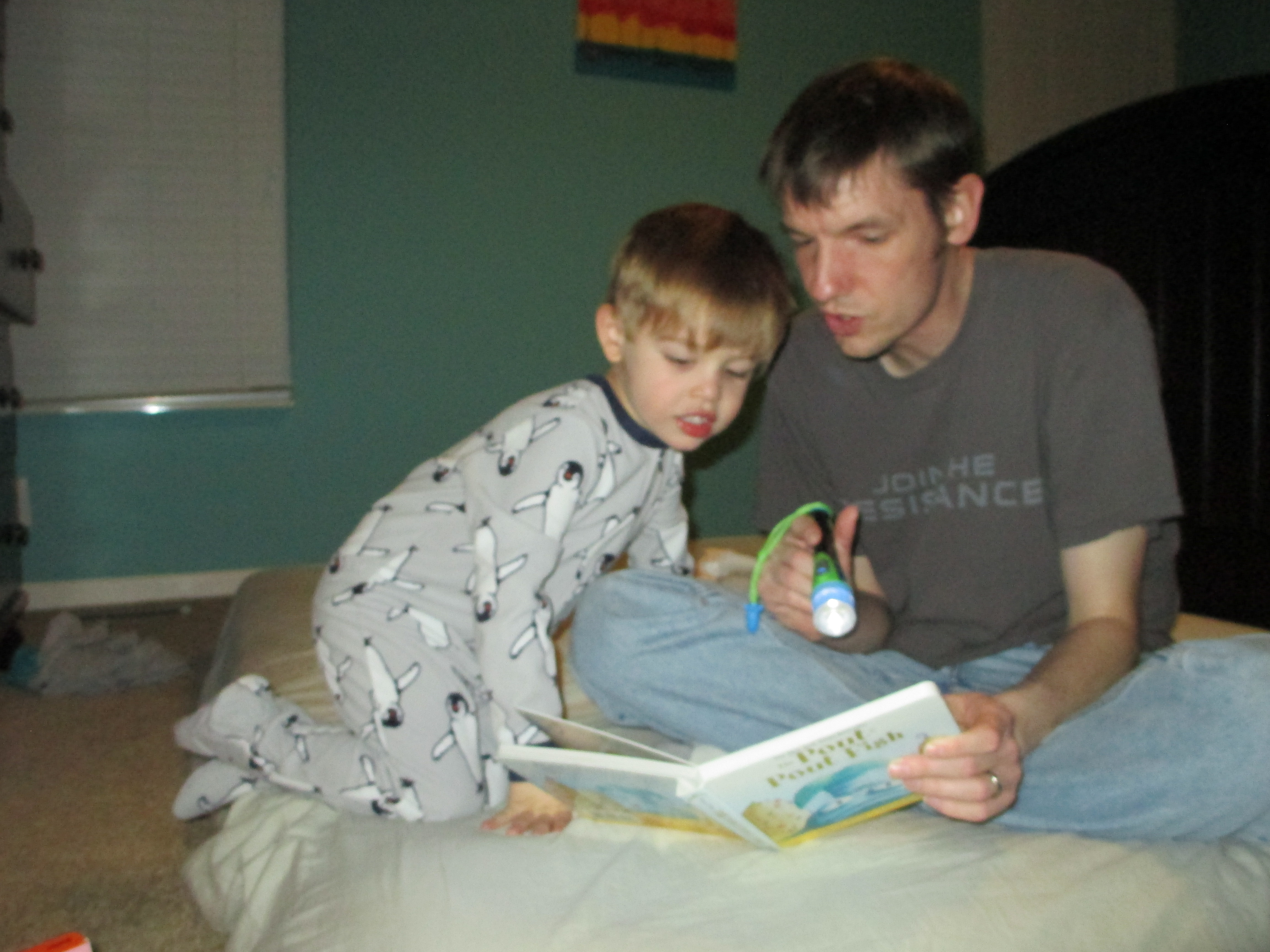
When you read wordless picture books, you can modify your storytelling to use single IMG_2990words or shorter phrases. You might want to do this if your child does not yet understand longer strings of connected language, or is still developing his attention span. If you are learning to sign, you do not have to feel bound by the print and feel pressure if you don’t know every sign in the text. If you are learning to cue, you do not have to worry about cueing long passages at one time. Instead, you can focus on telling the story and enjoying book sharing with your child.

What about older children?

Wordless picture books are not limited to simple stories aimed at younger children. You can find intricate and sophisticated stories appropriate for older children as well. The flexible nature of these books fosters creativity and reduces the pressure for your child to produce the “right” answer. If you have a reluctant reader who feels anxiety when presented with print, she may be more comfortable with a wordless picture book. Successfully interacting with a book can empower your child to see herself as a reader and engender a love of reading.

el deafoThe genre of graphic novels has been rapidly expanding over recent years, creating more age-appropriate opportunities for older children and teens to enjoy wordless picture books. You will find graphic novels that range from little or no text to very print-heavy, but all are sure to convey the story clearly through pictures. An excellent graphic novel to check out is El Deafo by Cece Bell. Although it is text-heavy, it features a deaf main character and positive themes for deaf and hard of hearing readers, and has been well received by fans and critics.

Favorite wordless picture books

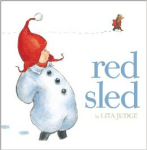
By Lita Judge:

untitled - Copy red


By Suzy Lee:

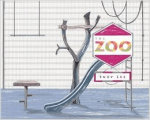
mirror shadow wave zoo


By David Wiesner:

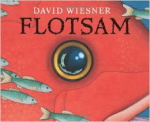
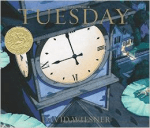
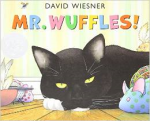
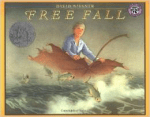
flotsamtuessector mr free


I had such a hard time paring down the list of my favorite wordless picture book titles or authors! For many more titles, click here and look for “wordless” in the book descriptions.


A final thought

Wordless picture books can provide you and your child with less pressure and more freedom to enjoy story time together. Please remember that you can try every single one of these suggestions with traditional books as well. Ignore the text, read the story in a way that matches your or your child’s language skills, make up your own story, let your child take a turn – whatever you do, make reading fun!


Louise Rollins has worked with deaf and hard of hearing children and their families in early intervention, school, and recreational settings in Maryland for thirteen years. She loves high-quality children’s literature and book-sharing with families.

Hands & Voices is a non-profit, parent-driven organization dedicated to supporting families of children who are deaf or hard of hearing.